Wednesday, May 28, 2008

Presidents find favor in the Waiver; we share the blame

Though "If I forget thee, O Jerusalem..." has become a near-ubiquitous reference point for discussions about the Israeli capital, there is another Psalm that rings poignant with an upcoming ignominious anniversary.

"Behold, your foes are in an uproar, and those who hate you have raised their head," warns Psalm 83. "They said, 'Come, let us cut them off from nationhood, so that the name of Israel will not be remembered any longer'."

May 31 should be the ninth anniversary of the opening of the United States Embassy in Jerusalem; instead, it will mark the ninth anniversary of nothingness carefully constructed, lies carefully crafted, and failures shamefully abetted.


It will mark nine years since Senators Bob Dole, Jon Kyl, and Joseph Lieberman saw insulting proof that they had overestimated Jewish support for recognition of Jerusalem's Israeli sovereignty.


The Psalm quoted above does not mention Jerusalem, but rather "nationhood," and we should never hesitate to equate the two. Because on Passover, we do not say "next year in Tel Aviv"; after the '67 war, we did not sing "Ramat Gan of gold"; we do not celebrate Yom Herzliya Pituach.


We should revere every Israeli city as hallowed ground. But Jerusalem, whether under Israeli sovereignty or not, should be treated as the beating heart among the organs of Jewish unity.


The Jerusalem Embassy Act of 1995, sponsored by Dole and passed overwhelmingly in both houses of Congress, states, among other provisions, that Jerusalem is the "capital of the State of Israel" and "the spiritual center of Judaism". It also declared that by mid-1999, the relocation of the U.S. embassy to Jerusalem from Tel Aviv should be complete.


After the BBC last year apologized for calling Jerusalem Israel's capital, I asked Alan Dershowitz if there were some provision in international law regulating a state's designation of its capital that perhaps I didn't know about.


Dershowitz smiled at the absurdity that news outlets like the BBC required my question to be anything other than rhetorical. He told me that any nation may set its own capital, and to deny such basic rights to Israel was the uncivil union of hypocrisy and anti-Zionism.


So, if Jerusalem is Israel's capital, and the Embassy Act states that "Each sovereign nation, under international law and custom, may designate its own capital", then what's the problem? It's the escape clause, called the Presidential Waiver, which states that the president may suspend the action for six months if he believes it will "protect the national security interests of the United States."


Former President Bill Clinton and current President George Bush have both used the waiver every six months. Clinton, having promised to review the situation after Camp David, presumably put his intention to move the embassy in the same pile as his promise to commute Jonathan Pollard's sentence. Bush's hands-off approach to the peace process, often for the better, unfortunately seems to include keeping his hands off the embassy.


But to blame only Clinton and Bush would be a mistake. The Israeli government has routinely undermined efforts to move the embassy, afraid it will upset their Palestinian negotiating partners. In 1995, then-Communications Minister Shulamit Aloni told the New York Times that American congressional support for moving the embassy to Jerusalem "has a smell of provocation." Charming.


The powerhouse American Israel Public Affairs Committee (AIPAC) admitted that it officially opposed such a bill, but once the bill was drafted and voted on, former AIPAC head Neal Sher said AIPAC was "boxed-in" and forced to support it. At the time of the bill's floor vote, the Conference of Presidents of Major American Jewish Organizations did not take a position on the bill, and refused to endorse an earlier version of it. The Zionist Organization of America (ZOA) took a strong stance supporting the bill, but its pleas failed to inspire even an echo.


The Times picked up on that lead and ran with it; Times columnist Thomas Friedman accused Kyl and Lieberman of "exploit[ing] the issue for Jewish votes."


Other news organizations carried that mantle. CNN, in its news story about Bush promising to move the embassy in 2000, explained snidely that "Jerusalem is claimed as its new capital by Israel". Washington Post columnist Richard "Israel itself is a mistake" Cohen wrote that moving the embassy would only "win points wherever Dole gathers campaign funds" since Jerusalem's "political status is disputed" -- though the embassy would be in undisputedly Israeli west Jerusalem.


"Tel Aviv is charmless. For the time being, though, it will have to do," Cohen declared.


One ally in the media was Times columnist William Safire. Safire had no patience for the "national security" waiver, since, as he wrote in July 1996, Clinton had presented no national security threat. Instead, Clinton's spokesman stated that the waiver was being exercised "to ensure that no steps are taken that could be interpreted as pre-empting the negotiating process."


Safire fired back that such an "excuse for delay is nowhere in the law". For that matter, Safire said, the substance of the argument was based on a false premise anyway -- that peace negotiations would be upset. He quoted Lieberman as pointing out that in any final status agreement, part of Jerusalem would be Israeli.


"Our site would be on Israeli land," Lieberman said, infusing the discussion with a refreshing dose of logic and fair play. "Let peace negotiations proceed and let the U.S. law be carried out."


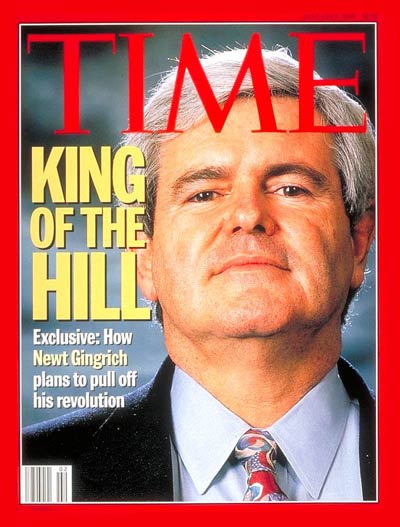
Lieberman wasn't alone. A year earlier, then-Speaker of the House Newt Gingrich marveled at the opposition to what he thought was patently obvious.


"I think it is absurd for us to single out Israel as a country where we define what we think the capital should be," Gingrich told Israeli media in 1995.


Thus, the desire to move the embassy was bi-partisan -- even at the N.Y. Times! So what held it up? Safire pulled no punches.


"In Jerusalem's 3,000th year, Israel's new Government is eager for America's acknowledgment of its capital," Safire wrote in 1996. "Plain justice and the new realism demand it. The last obstacle is Mr. Clinton's reluctance to obey the law."

And that reluctance to obey the law has been passed down. It, too, has become bi-partisan, and a tradition in the Oval Office.


But maybe it really was a national security issue. The vehemently anti-Israel Middle East International warned of, in an editorial during the 1984 Reagan-Mondale election campaign, what amounted to thinly veiled threats of retaliation in the Arab world should the embassy be moved to Jerusalem.


"The reaction to the move in Muslim countries would be catastrophic," the editors wrote. "It is easy to imagine the attacks on American embassies, the rupture of diplomatic relations, and all the rest that would follow."


"All the rest" is a diplomatic way of putting it, but I think the message gets through.

The editors did, however, manage to stumble upon what unfortunately has been confirmed in the almost-quarter century since.


"Supporting the move to Jerusalem," the editors wrote, "is one of those easy gestures, "like being in favor of a united Ireland, or approving of motherhood and disapproving of sin, which cost the maker of them nothing."

In 1995, Senator John McCain co-sponsored the bill, and during her 2000 Senate run Hillary Clinton said she supported moving the embassy ASAP. When I asked McCain's campaign what his official position is on the issue, a spokeswoman reiterated that McCain co-sponsored and voted for the original legislation. McCain was in Jerusalem in March of this year and stated unequivocally that it is Israel's capital; would he commit to moving the embassy there? His campaign wouldn't get that specific with me.


A Clinton staffer, before setting off on the hunt for the campaign's official stance, told me she had just been to Jerusalem less than a year ago and remembered visiting the U.S. Consulate General there -- a reminder that there is at least some form of official recognition in the holy city. Senator Barack Obama has yet to respond to my query in any form.


So, is that it for moving the embassy? Will politicians no longer be cavalier about tossing out that promise?


They may not feel they need to make the promise anymore, and that's probably a good thing. But what about us? Can we so easily be absolved of our role in letting the issue fade?


Lieberman once exclaimed that, if need be, he and former Senate Majority Leader Trent Lott would move the embassy to Jerusalem "ourselves, brick by brick!" Yet, when the mouthpieces of the American Jewish community picked up their shovels, it was to facilitate the issue's burial.


After a nearly 2,000-year struggle to reclaim it, Jerusalem shouldn't be taken so lightly. And on May 31, it shouldn't be forgotten.


(Originally published in the May 23, 2008 edition of The Jewish State.)


Friday, April 11, 2008

At the U.N., an ugly shade of lipstick on the caterpillar

{This column was first printed in the April 11, 2008 edition of The Jewish State}

The government is lying about who shot JFK. The government is lying about Hiroshima and Nagasaki. The government is lying about Pearl Harbor. The government is lying about 9/11.


Not sure if he's covered the moon landing, but former Princeton professor Richard Falk thinks the government is lying to you about the above formative historical events. According to Falk, the government has also been lying about Yasser Arafat being a terrorist, and, as he said in April 2002, "we should at least be clear that [Ariel] Sharon is a much bigger obstacle to real peace than Arafat is or ever was."


Falk's hard work has paid off; on March 26, he was appointed "special rapporteur on the situation of human rights in the Palestinian territories occupied since 1967" by the United Nations Human Rights Council.


This newspaper offered a less than glowing appraisal of the efforts of Falk's predecessor, John Dugard, in a recent issue. As I am not especially given to "piling on," the U.N. would have to have appointed someone so clearly possessed of anti-Israel, anti-Zionist conspiracy theories to replace Dugard in order to provoke an immediate response on these pages.


True to form, they did.


Last year, Falk set out to pad his resume with something that would put him a step ahead of the competition for the U.N. job -- the privilege of consuming American and other Western taxpayer dollars while sowing the seeds of U.N.-subsidized anti-Semitism. What he came up with was an essay he authored called "Slouching toward a Palestinian Holocaust," in which he compared the Israeli government to the Nazis.


"There is little doubt that the Nazi Holocaust was as close to unconditional evil as has been revealed throughout the entire bloody history of the human species," Falk opens the essay.

He then goes on to explain just how gruesome and barbaric the Holocaust was, to make sure the reader understands to what he is about to compare Ehud Olmert's government.


"Is it an irresponsible overstatement to associate the treatment of Palestinians with this criminalized Nazi record of collective atrocity? I think not," Falk writes. "The recent developments in Gaza are especially disturbing" -- the Nazis were disturbing, but the Jews are especially disturbing -- "because they express so vividly a deliberate intention on the part of Israel and its allies to subject an entire human community to life-endangering conditions of utmost cruelty."


Falk laments how the world watched silently as the 1994 Rwandan genocide took place, as the 1995 Bosnian genocide happened, and again as the genocide unfolded in Darfur.


Though some two million people in the Darfur region of Sudan have been displaced and 450,000 have been killed since the atrocities began in 2003, "Gaza is morally far worse," Falk states.


"It is far worse because the international community is watching the ugly spectacle unfold while some of its most influential members actively encourage and assist Israel in its approach to Gaza," he writes.


And just to put it in perspective, Falk offers: "It is helpful to recall that the liberal democracies of Europe paid homage to Hitler at the 1936 Olympic Games, and then turned away tens of thousands of Jewish refugees fleeing Nazi Germany."


Falk has left a paper trail of his journey from obscurity to subversive critic of Israel and the U.S. Unfortunately, that trail -- made up of columns contributed to various newspapers and magazines -- reveals a person who is at his best moments confused, and at his worst moments much, much worse.


For example, Falk displays an intriguing lack of knowledge about the targets of his invective in a January 2002 essay titled "Appraising the war against Afghanistan". He criticizes the administration of President George W. Bush for too broadly extending the brand of "terrorist" to include "groups" like Hamas and Hezbollah.


"These latter groups have neither ideologically nor tactically associated themselves with al-Qaeda and the visionary outlook of Osama bin Laden, and their struggles are much harder to categorize," he writes.


Yet, we know beyond a shadow of a doubt that al-Qaeda and Hezbollah have worked together, especially thanks to the late Imad Mugniyeh, who trained bin Laden. Not only is Hezbollah ideologically and tactically associated with al-Qaeda, but al-Qaeda actually modeled itself after Hezbollah -- it was a clone of the organization, or close to it.


He admits that Hamas has used "gruesome terrorist tactics" against Israeli civilians, but "the context has been one in which Israel has also used even more destructive tactics against Palestinian civilian society". More destructive and gruesome than suicide bombers and the kidnapping and torture of civilians -- both embraced by Hamas? We'll never know, because Falk doesn't give any examples.

He then states that Hamas and Hezbollah should be left intact, because to destroy them would deny the Palestinians their right to self-determination, and "should such groups be destroyed the effect would be to stabilize an oppressive Israeli occupation."


This is a point on which Falk has shed some valuable light, however. In a 2006 column he wrote for the Topeka Capital-Journal, Falk calls on the U.S. and Israel to engage in dialogue with Hamas. He complains that the U.S. and Europe insist on freezing Hamas out of the discussion "unless its leaders explicitly renounce terrorism, recognize Israel, accept all prior agreements between the Palestinians and Israel, and annul that part of the Hamas charter that calls for Israel's destruction."


This is unreasonable, he declares, because such devotion to terrorism and Israel's destruction is part of the genetic makeup of Hamas-led Palestinians. Take that away, and there's nothing left of Hamas.

"The chance of Hamas meeting these political conditions all at once is essentially nil since they amount to a renunciation of struggle and almost a declaration of surrender," he writes.

In other words, it's like telling the sun not to shine.


And the sun isn't shining, apparently, in the wilderness in which Falk wanders. He gives this away in his prescription for peace, published in The Nation in April 2002. Since only the Palestinians' violence is designated as terrorism, he writes, "Israel's greater violence" gets off scot-free.


"The point here is not in any way to excuse Palestinian suicide bombers and other violence against civilians, but to suggest that when a struggle over territory and statehood is being waged it can and should be resolved at the earliest possible point by negotiation and diplomacy, and that the violence on both sides tends toward the morally and legally impermissible," Falk writes.


To the casual observer living in the United Kingdom (or Waziristan, for that matter), that comment may seem erudite and reasonable -- a given. But in fact, as we know, the conflict is not about land or statehood, since the Palestinians have repeatedly refused any offer of land or statehood that wasn't prefaced by "From the river to the sea...."


Falk also wrote that the contention that Arafat resorted to terrorism is "seriously misleading." In fact, Falk writes, Arafat was the "moderate voice," dramatically fighting to protect Israeli civilians from attempted Palestinian terrorism; anyway, it was Sharon's visit to the Temple Mount "that started the second intifada."


Wild-eyed conspiracy theorists are usually interesting -- from a distance. But Falk doesn't keep his distance from such people, rather he keeps their company.


One of those characters is David Ray Griffin, who wrote a book called "The New Pearl Harbor: Disturbing Questions about the Bush Administration and 9/11". Though the book is a reinvention of the wheel, its sales riding the wave of earlier 9/11 conspiracy theorists, it was very important to Falk that this book be published. Falk helped find a publisher for it, and wrote the introduction to the book as well.


"As with Pearl Harbor there are ample reasons to receive news of massive attack with some skepticism," Falk writes in the introduction. "As with the difficulties of the Roosevelt presidency in rallying the country for war, here too, the neocon advisers shaping the foreign policy of the Bush Administration had been frustrated by their inability to mobilize the country for war. These prominent advisors had made no secret of their fervent wish for some sort of hostile attack of dramatic magnitude that would awaken the American people to their sense of the dangers of the post-cold war world, as well as of the opportunities for global domination, a vision of global empire that was openly embraced by neocon leading lights."


Falk accuses the media of ignoring the evidence, and the American public of resisting the truth. He explains that in Europe, clear-thinking people were immediately proposing "official complicity" in the attacks, but for some reason Americans just didn't get it. Of course, the "neocon leading lights" were primarily Jewish, pro-Israel advisors, so it's unclear if Zionist brainwashing was the cause of the public's ardent support for its country, its military, and its president immediately following 9/11.

It shouldn't surprise anyone, then, that Falk didn't face much competition; according to U.N. Watch, the Islamic and Arab states pressured the council leadership to list only Falk as a nominee for the post.


This is the new, "reformed" U.N. human rights body. It calls to mind what former U.N. Ambassador John Bolton said about the U.N.'s efforts to build a new rights council from the same broken pieces and using the same shoddy workmanship as the last.


"We want a butterfly," Bolton said. "We don't intend to put lipstick on a caterpillar and call it a success."

Wednesday, April 9, 2008

Opinion polls pave the 'street' to Ramallah

{This column was first printed in the March 28, 2008 edition of The Jewish State}

If we never successfully figure out which came first, the chicken or the egg, is it proper to assign blame to either one for the sins of both?


Many of us have, with the best of intentions, done just that, as we hold on to some receding ray of hope for peace in Israel.


We will routinely say, "It's the leadership that's the problem with the Palestinians, not the people." It's a noble tack, I admit, but do we really know which came first, the Palestinian leaders or the Palestinians? Do the Palestinians get the leaders they want, or do the leaders get the Palestinians they want?


That question appeared to be answered by the election of the Islamist Iranian satellite Hamas, a terrorist organization committed to the destruction of Israel, by the Palestinian people in January 2006.


But then people said, "Well, Fatah was corrupt, and the election was a vote against corruption, not a mandate for perpetual war."


Such apologia have been far more difficult to find since the March 17 release of the new survey conducted by the Ramallah-based Palestinian Center for Policy and Survey Research (PSR).


The survey, titled "Palestinian Public Opinion Poll No. 27," finds that the "moderate" Fatah government led by Mahmoud Abbas and Western darling Salam Fayyad endured a sharp drop in public support in the West Bank and Gaza, while Hamas, led by Ismail Haniyeh, has won over another 10 percent of the Palestinian population.


And it's not just a superficial yea-or-nay vote, either. The pollsters found that not only is the Hamas leadership more "popular," but the Palestinian public has offered more support for Hamas's positions and policies, as well as its legitimacy.


Most politicians love focus groups and opinion polls because the polls basically tell them what to do. So, reading the polls, how does a politician or party gain the favor of the Palestinian "street"?


"These changes might have been the result of several political developments," according to the survey's Main Findings, "starting with the breaching of the Rafah border with Egypt during the last week of January and first week of February, followed by the Israeli military incursion into the Gaza Strip leading to a large number of Palestinian causalities and an increase in the number of rockets launched from the Gaza Strip against Israeli towns such as Sderot and Ashkelon, the two suicide attacks in Dimona and Jerusalem leading to the death of nine Israelis, and ending with the failure of the Annapolis process in positively affecting daily life of Palestinians in the West Bank, in stopping Israeli settlement activities, or in producing progress in final status negotiations."


In other words, what floats the average Palestinian's boat? Bombing a border wall with Egypt, launching rockets at innocent Israelis, suicide bombing Israeli towns, and shooting up a yeshiva library while killing as many inside as possible.


What are some of the average Palestinian's pet peeves? Prolonged exposure to peace negotiations and Jewish villages.


For a while, Fatah held a sizeable advantage in head-to-head polls with Hamas, if new parliamentary elections were to be held immediately. No mas.


The survey finds that the gap has narrowed from 18 percent to seven, putting Fatah up only 42 percent to 35 percent. In December, it was 49 percent to 31 percent.


Eleven percent remain undecided in both polls. That would be the "swing" vote, perhaps waiting to see how many dead Jews each party is willing to offer for their vote.


Another bad omen for Fatah is that it is slightly more popular in Gaza than it is in the West Bank.


In December, polls showed Abbas would beat Haniyeh in a presidential election 56 percent to 37 percent. The new survey shows that Haniyeh would win a nail-biter if elections were held today, 47 percent to 46. (Haniyeh shouldn't get too excited; he loses badly in a head-to-head matchup with jailed intifada veteran and renowned Jew-killer Marwan Barghouti, 57 percent to 38.)


The other findings are similar — the legitimacy of the governments, the favorable-unfavorable ratings of each administration, approval rating comparisons, etc. In fact, although Hamas's takeover of the Gaza Strip in June 2007 is still rejected across the board, the Palestinians have moved away from blaming Hamas for their actions.


"The tendency to avoid blaming Hamas alone for the continuation of the split reflects a change in public perception regarding the positions of the two factions regarding return to dialogue as an exit from the current crisis," the findings state. "Support for Fatah's and Abbas's position, which demands a return to the status quo ante as a precondition to dialogue drops from 46 percent last September to 39 percent in this poll. Support for Hamas's position, which calls for unconditional dialogue, increases from 27 percent to 37 percent during the same period."

Here are the survey results vis-a-vis the peace process:

  • "66 percent support and 32 percent oppose the Saudi initiative, which calls for Arab recognition of and normalization of relations with Israel after it ends its occupation to Palestinian territories occupied in 1967 and after the establishment of a Palestinian state.
  • 55 percent support and 44 percent oppose mutual recognition of Israel as the state for the Jewish people and Palestine as the state for the Palestinian people as part of a permanent status agreement.
  • But 80 percent believe that the negotiations launched by the Annapolis conference will fail while 14 percent believe it will succeed.
  • Moreover, 68 percent believe that the chances for the establishment of a Palestinian state during the next five years are non-existent or weak and 30 percent believe chances are fair or high.
  • 75 percent believe that the meetings between Mahmoud Abbas and Ehud Olmert are not beneficial and should be stopped while only 21 percent believe they are beneficial and should be continued.
  • 64 percent support and 33 percent oppose launching rockets from the Gaza Strip against Israeli towns and cities such as Sderot and Ashkelon.
  • An overwhelming majority of 84 percent support and 13 percent oppose the bombing attack that took place in a religious school in West Jerusalem. Support for this attack increases in the Gaza Strip (91 percent) compared to the West Bank (79 percent)."


The emphasis on the last poll result is added (though they meant to write "shooting," not "bombing," presumably), because it is the nutshell in which the psyche of the Palestinian "street" resides.


Each poll conducted by PSR — which, by the way, uses sample sizes large enough to trust the results, and reputable Israeli polling institutions have collaborated with PSR on past surveys — since the beginning of 2008 shows the same thing: an upward trend in popularity for anyone that can accomplish significant feats of violence on behalf of the Palestinian people.


That means that these poll results weren't a surprise to Haniyeh; he knew exactly how to win over the Palestinian people.


So disciples of Edward Said can jump up and down all they want about "Western imperialists," but here in America, President George W. Bush's approval ratings plummeted with each kernel of news about violence committed against terrorists on behalf of Americans, Europeans, Iraqis, and the general cause of freedom. By contrast, in the Palestinian "street," senseless violence committed on behalf of senseless, violent people against innocent teenage students is enough to solidify your lead in the polls.


Said's glazed over, proudly subversive followers would call drawing attention to this problem a form of "post-colonial" hysteria. But these PSR surveys are the sugar in Said's engine of intellectual Orientalism. They blow to pieces the apologetic theories of the leftist American academe, toppling its ivory tower and its minions.


Because the truth — unfortunately for Palestinian sympathizers and terrorist apologists — is right here in the PSR's findings: one hand may be shaking that of a Western diplomat, as long as the other hand is holding a grenade with Israel's name on it, ready to spill innocent blood.


As for which came first, the headless chicken or the rotten egg — maybe it's time to stop exploring the origin of the sequence, and start figuring out how to break the cycle.


Wednesday, March 19, 2008

The U.N., where 'Judaization' is a human rights violation

(Author's note: This was first published in the March 14 edition of The Jewish State.)


With the new report by Special Rapporteur John Dugard, it can no longer suffice to say that the United Nations has egg on its face, for egg has simply become the world body's permanent visage.


Dugard is due to present his new report "on the situation of human rights in the Palestinian territories occupied since 1967" to the UN Human Rights Council. In the section titled "Human rights in the West Bank and Jerusalem," Dugard reveals "the instruments that most seriously violate human rights" by Israel.


Among them, tellingly, is "the Judaization of Jerusalem."


Dugard, a South African lawyer, is responsible for investigating only Israel's potential human rights violations for the UNHRC, and has prepared his verdict, in the form of a 25-page report, for the council's first regular session of 2008.


The report is replete with the same types of factual errors, misrepresentations, alarmingly obvious bias, and preposterously uneducated contentions that we have all come to expect from Dugard and his employers, all written in a Narcissus-inspired third-person, with Dugard only and always referring to himself as "the Special Rapporteur."


But the kind of venomous anti-Semitism jubilantly offered to us on page 13 reveals that Dugard has stooped so low he would need an elevator to reach the Palestinians' weapons smuggling tunnels whose existence he so dutifully ignores.


Dugard was picked for this mission in part because of his South African residence, making him a perfect choice to level "apartheid" charges at the Jewish state. But that should be, for him, a double-edged sword; as a white South African he should also understand the sensitivity inherent in the way descriptions of race, religion, and nationality are couched. Indeed, he probably does.


So would Dugard dare call Zimbabwean dictator Robert Mugabe's policy of confiscating land from white owners "the blackification of Zimbabwe"? Would we hear him whine about the ongoing "Islamization" of Mecca or London? How about "the Orientalizing" of public universities?


Of course not, with good reason; such terms are racist, hateful, hurtful, discriminatory, and wildly inappropriate.


And "the Judaization" of anything belongs in that same category. As an indication of the phrase's nefarious intent, it was used by Adolf Hitler after he became Fuhrer of Germany's National Socialist Party.


"Internationalization today means only Judaization," Hitler told an audience in September 1922. "We in Germany have come to this: that a 60-million people sees its destiny to lie at the will of a few dozen Jewish bankers. This was possible only because our civilization had first been Judaized.... Eisner said in 1918 that we had no right to demand the return of our prisoners -- he was only saying openly what all Jews were thinking. People who so think must feel how life tastes in a concentration camp."

Yasser Arafat used the term in 1998 as he threatened to launch what would soon be known as the Second Intifada.


"The Palestinian Authority has taken steps to actively struggle against the Israeli Judaization scheme.... The Palestinian Authority is ready to restart the intifada in order to stop the assault on the Arab character of Jerusalem," Arafat told the Algerian newspaper Sawt al-Ahrar on Aug. 1, 1998. A year earlier, Arafat had delivered a similar warning to then-Israeli Prime Minister Binyamin Netanyahu.

The term is also a favorite of Sheikh Ra'ad Salah, the leader of the northern branch of the Islamic Movement, who routinely calls for anti-Jewish riots in Israel and issues death threats to Israeli public officials, as he did to then-Deputy Prime Minister Avigdor Lieberman in November 2006. Salah also uses the term as a way to de-legitimize Israel and the Jews: "The claims of the Jews are big lies and they have no right to any speck of dust here," he said on March 10.


That's quite a legacy; from Hitler's prewar rhetoric, to Arafat's pre-intifada warning, to Sheikh Salah's death threats, to Dugard's rant. That means that the newest member of this club is also a member of the United Nations, which is something the world should watch very carefully.


Dugard's treatment of terrorism is also characteristic. In the report, he uses the word "terrorism" interchangeably with "terrorize," which enables him to equate Israeli actions, such as "sonic booms," with actual violence, like Palestinian "suicide bombs and Qassam rockets" -- all of which "must be condemned."


And although al-Qaeda and its Iranian associates have established themselves in Gaza, Dugard goes to great lengths to insist that Palestinian terrorism -- often enabled and sometimes carried out by al-Qaeda -- is quite different from terrorism enabled or carried out by, say, al-Qaeda.


"Common sense, however, dictates that a distinction must be drawn between acts of mindless terror, such as acts committed by al-Qaeda, and acts committed in the course of a war of national liberation against colonialism, apartheid, or military occupation," Dugard states in his report. "While such acts cannot be justified, they must be understood as being a painful but inevitable consequence of colonialism, apartheid, or occupation."

Ah, "common sense." Something tells me Israelis won't sleep any better knowing that the murderous rockets landing daily on Sderot, the recent deadly suicide bombing attack in Dimona, and the March 6 massacre of eight yeshiva students in Jerusalem weren't "mindless," but, rather, "inevitable."


But Dugard clears the whole mess up when he divulges "the root cause of Palestinian violence -- the occupation."


It's a Chico Marx "Who you gonna believe, me or your own eyes?" moment for Dugard. Palestinian violence is taking place because of the Israeli "occupation," which makes the Arabs in the West Bank and Gaza quite prescient: the Arabs who massacred Jews in Hebron in 1929 did so because they saw the "occupation" coming. Ditto for the 3,000 fedayeen attacks in the year 1952 alone.


But maybe Dugard is referring to acts of violence in the Negev, where Sderot and Ashkelon are regular targets of Gaza-based terrorists. He must be forgetting the March 1954 ambush by terrorists of a bus traveling from Eilat to Tel Aviv, during which the terrorists shot every passenger one by one.


Or a year later, when terrorists attacked a Jewish wedding in the Negev town of Patish.


The list of those attacks is quite long, so perhaps Dugard is just referring to attacks around the Gaza border area. But then he'd have to exclude the 1957 murder of two Israeli civilians by Gazan terrorists at Nir Yitzhak.


No, that list is unfortunately too long to disregard as well, so he must be referring only to towns that are regularly directly attacked by Palestinians today. But that can't be, either, because then he'd have to ignore the 1956 murder of a woman in Ashkelon who was killed when terrorists threw hand grenades into her home.


Maybe he means terrorist attacks that are simply self-defense measures on Arab land. But then he'd have to explain why Arabs in Gaza killed or wounded several Israeli civilians by planting landmines on the Israeli side of the Gazan border in 1957.


I wonder what he thinks about all the Fatah terrorist attacks -- explicitly "Palestinian," as part of the PLO -- that began in 1965, two years before any "occupation."


Of course this is just a sampling, but the point is that Dugard exposes himself and the U.N. He decries the Road Map, because it forces Palestinians to swear off violence -- something he doesn't think should be a precondition for statehood. He claims Israel is still occupying Gaza thanks to "technological developments."


He blames Israel for conditions that "could produce chaos in the Gazan monetary system"; for the fact that Gaza's schoolchildren "lag behind refugee children elsewhere"; for a system of "road apartheid"; for obstructing Palestinian freedom of movement with "earth mounds"; for threatening "the social fabric of [Palestinian] society"; and for creating an ominous-sounding "permit regime."


He explains: "houses and structures may not be built without permits. The bureaucratic procedures for obtaining permits are cumbersome and in practice permits are rarely granted. As a result, Palestinians are frequently compelled to build homes without permits."


He complains that Israel's release of 779 prisoners was "such a small number of prisoners" so as to render the gesture meaningless. He then, inexplicably, mentions that there was a riot at Ketziot prison that resulted in one death and 250 injuries -- presumably, by Dugard's logic, a sure sign that these prisoners should be released into society.


All this buildup would certainly put a substantial amount of pressure on Dugard to provide a spectacular grand finale of his report. He does not disappoint.


Most American and European leaders, and certainly many Israelis and Palestinians, would respond in similar fashion if asked what a final status agreement would look like. They would probably describe it as the creation of a Palestinian state in Gaza and the West Bank, with territory swaps to include major Jewish enclaves in Israel and major Arab enclaves in Palestine.


Such an agreement, however, would be illegal according to Dugard.


He states: "any agreement between the Palestinian authorities and the Israeli Government that recognizes settlements within the occupied Palestinian territory, or accepts the annexation by Israel of Palestinian land within the wall, will violate the Fourth Geneva Convention."

So, according to Dugard's interpretation of the Geneva Conventions, a non-nation that's not a signatory to the Conventions is not at liberty to enter into a formal agreement if its new borders would not conform to Dugard's interpretation of an agreement it never entered into.


I guess it's good for the Palestinians that, ironically, when the PLO smugly tried to volunteer to follow some cherry-picked parts of the Geneva Conventions in 1989, the PLO and the all the signatories received a response from the Swiss Federal Council stating that it had no idea what kind of relevance or legality the PLO's letter had, "due to the uncertainty within the international community as to the existence or non-existence of a State of Palestine."


I'm sure John Dugard would be happy to explain it to them.


Thursday, November 22, 2007

'Redacted' or not, here comes Brian De Palma!

It is customary on Thanksgiving for Americans to talk about what we are thankful for. We certainly have much to appreciate, but it's doubtful we'd have all we have (or any of it) without people like my friend Danny.

Danny is a Captain in the United States Air Force. He is also engaged to one of my oldest, dearest friends, and has made her a deliriously happy bride-to-be. So for that alone, of course I am thankful.

But Danny comes from a military family; that is, a whole family of brave men and women who live their lives risking everything, every day, for us. Those families are not in short supply in the United States Army, Navy, Air Force, Marines, and every other branch or division of our Armed Forces. Those families are plenteous, as are the even-more common individuals who risk their lives for us and our allies while their families, if they have families, are many thousands of miles away.

As a journalist, I haven't done much reporting on the war in Iraq. But that which I have written on the war has been part of what many would call the "truth surge" -- an attempt to mirror (without, of course, comparing) -- the remarkably gripping and off-the-mat revitalization of our Armed Forces' rebuilding mission following their successful Operation Iraqi Freedom.

Regardless of the level of daily progress in Iraq, however, the point is that the men and women of our Armed Forces are heroes. For that, I am thankful.

Brian De Palma doesn't agree, however. And whatever the Hollywood director is thankful for today, it isn't the aforementioned sacrifices by our troops.

That's because De Palma doesn't think my friend Danny is a hero. He doesn't think Danny's family are heroes, and he doesn't think much of Danny's fiancee Linda's year spent alternating between clinging to hope that Danny was OK and fighting loneliness.

And that's not because I'm staging or parroting some right-wing interpretation of De Palma's new movie, Redacted, in which De Palma portrays American soldiers as crazed, rabid rapists. It's because De Palma, in a press conference about the movie, in his own words clearly described exactly how he feels about our soldiers.

"The problem is that the language and the way the soldiers are truly reacting are in their blogs and in the videos they make and in the documentaries you see that are made from those videos. When you see these guys on television, they're nothing but giving talking points from whatever they’re supposed to say in order that the one specific image of how the war is going is supposed to be projected. And it's very much understandable."

Take a look at that last line: And it's very much understandable. In other words, we can clearly understand why soldiers wouldn't act like themselves in front of the American public. We might have some respect for these animals as long as we didn't see their true colors, is what De Palma is trying to say.

Look, it isn't a secret that De Palma is just a hack looking to profit off the war. But we can see why he wouldn't act that way at a press conference. We can see why he would just read talking points for the public without saying explicitly that he despises every man and woman in uniform. It's understandable.

You see, what's real is scripted, and what's scripted is real, in De Palma's world.

"We're in a new era of reality television, so if you can believe two people on a beach... are discussing how to scheme against two other people, and they're whispering to each other on 'Survivor', I think you can practically believe anything," De Palma told the press conference attendees.

Reality is unbelievable, so just to be safe, believe Hollywood. You know you can trust them.

And don't worry, though he hates the troops, De Palma hates President George W. Bush more. And his deranged hatred of Bush is the reason he's making this movie.

As he told audience members at the NY Film Festival:

"You know when this administration's over, all the things they did are all going to come out; the books are going to start being written by everybody that was involved in hiding things and manipulating things. And I — we — basically, just want to sort of end this war, you know, and by trying to show what the reality of this war is — stop sugarcoating it."

There you have it. The two reasons, in Brian De Palma's own words, why he and I are thankful for very different things as we celebrate Thanksgiving and head into the Chanukah-Christmas season.

De Palma believes that: (A) It's reasonable to portray our soldiers as subhuman destruction machines if it's for a noble cause, like trying to subvert a twice-elected sitting president's freedom- and democracy-spreading agenda, and (B) He's showing people the "reality" of the situation which, as De Palma told the audience earlier, the mainstream American media just wasn't exposing -- that the soldiers risking their lives in one of the most daring yet noble undertakings in modern history are really just psychopathic thugs.

Today, I'm thankful for what Danny and his fellow soldiers have done for us, and that in March Danny will vow to make my friend Linda eternally happy. Danny and Linda's families are thankful for that, too. My family, and my friends, are thankful for those things as well.

And I think we're all pretty thankful that we're nothing like Brian De Palma.

Thursday, October 18, 2007

Who are these unmasked men?

Question: Who are Martin Kramer, Daniel Pipes, Peter Berkowitz, Nile Gardiner, and Norman Podhoretz?

Answer: They are Norman Podhoretz, Martin Kramer, Daniel Pipes, Peter Berkowitz, and Nile Gardiner, respectively.

Confused? So is Newsweek, the author of this pictograph-riddle.

Newsweek, the weekly personality tabloid, recently went after presidential candidate Rudy Giuliani with disastrous results. Not only was the article — which focused on his team of experienced and highly respected conservative advisers — embarrassingly inaccurate, the magazine offered a sidebar with the pictures, names, and descriptions of the six top advisers to help its reader(s) keep track.

Except five out of six headshots are mislabled; only Robert Kasten's photo matches his name and description.


Anyone who still reads Newsweek knows by now that the magazine's writers and editors have never heard of Republicans; they have, however, heard of "neoconservatives" and have been known to appoint "neocons" sans research or contact with said "neocons".

Which makes it even less acceptable to have made such a huge mistake — if you only know one group ("neoconservatives") you should at least know that group. Newsweek admittedly knows nothing of the one thing it claims to know anything about.

Of course, the magazine's hatred of these fine people has to do with the fact that most of them are clear-thinking experts on Middle Eastern affairs. What is striking, however, is that the MSM has championed defeat in Iraq for so long, they are actually getting bored; it's time for them to defeat any prospects for peace in Israel — which is why champions of logic and reasoning like Pipes, Kramer, and Podhoretz are in their crosshairs.
Giuliani recently questioned the wisdom of establishing an independent Palestinian state when it's clear that that state would sponsor terrorism against Israel and the United States. That is a logical approach to the situation, but one that earns you the label "neoconservative" by the MSM.

As president, Giuliani would be careful not to undermine the safety and security of the United States and its important strategic and moral allies. But the MSM isn't concerned with the United States or its allies, so why would Giuliani, who is steadfast in his loyalty to Americans and our Israeli friends, appeal to Newsweek?

Newsweek is a New York-based publication, and New Yorkers are famously protective of the man whose accomplishments as mayor of NYC are still not even fully appreciated by many in the tri-state area. (He helped NJ and NYC simultaneously by catching welfare double-dippers, and his use of the trigger/broken windows crime theory to clean up some of the uncomprehendingly dirty and dangerous parts of the city was more creative and intellectually impressive than most people give him credit for.)

Yet, all it took for the MSM to turn on him completely was his brainy-yet-tough approach to brokering the Arab-Israeli conflict only in such a way that would not sign the Jewish state's death warrant.

Time Warner, Inc., is also based in New York. Yet its current events magazine TIME decided to report on the upcoming Annapolis peace parley from... Cairo. The article, titled "Can Annapolis Forge a Mideast Peace?" unsurprisingly includes exactly zero quotes or comments from Israeli sources.

What it does include, however, are 14 separate references to "Arab sources". Only three are named, and they are the peaceniks Bashar al-Assad (Syria's dictator), Ahmed Abul-Gheit (Egypt's foreign minister), and Saudi Foreign Minister Prince Saud al-Faisal — and those references are either attributed to other news sources or public statements.

The only reference to Israeli points of view is the following sentence, written by the piece's author: "Israeli Prime Minister Ehud Olmert apparently prefers a looser conference agenda, one unlikely to commit to fresh negotiations."

Some form of the word "skepticism" was used three times in the article — never in a quote.

Arab "worry" or "concern" about lack of Israeli or American effort and concessions is referenced four times, and the author, Scott MacLeod, even uses the term "separation wall" to describe the Israeli security fence.

The term "photo-op" is thrown around, as are doubts about Israel's willingness to make peace and President George W. Bush's true intentions. The author refers to Hamas as Fatah's Islamic rival, failing to note that Hamas is actually Islamist, and that Fatah is at best Islamic (clearly not secular). And MacLeod doesn't feel it necessary to challenge either the Saudi prince's implication that Israel's settlements are illegal, or the Arab self-portrait as victims should the parley fail and the region descend into violence. (When was the last time Israelis launched an intifada?)

In other words, MacLeod wrote the article not by paying attention to the news, but by looking at his MSM handbook and relying on (only!) unnamed Arab sources.

So, memo to Giuliani: If you are skeptical about the creation of a Palestinian state, the media will come after you, (A) because you're not Arab or a terrorist apologist and (B) because you and your "neoconservative" advisers only want to go after enemies who have waged war against us.

Memo to everyone: If you want to become a mainstream media darling in the the United States, start by attacking our allies.

Otherwise, Newsweek doesn't even want to know your name.

Wednesday, October 3, 2007

Ahmadinejad or Gingrich? Free speech laws have spoken


You know something is wrong when our free speech laws are effectively a boon to President Ahmadinejad and a ban on President Gingrich.

Ahmadinejad’s American adventure needs no more mention here, but suffice it to say that the whole affair happened in defense of “freedom of speech”, yet that same freedom’s restrictions, which don’t apply to someone like Ahmadinejad, will keep former House Speaker Newt Gingrich from running for president.

It’s not ironic, it’s just sad — and it needs to encourage a concerted call to the American legislature that something is indeed wrong with the chokehold the McCain-Feingold law has put on political free speech.

Gingrich was mulling a run for the White House after watching the Republican Party stray from its cost-conscious, value-centric roots. He was about to launch a Web site to try to raise the $30 million he felt was needed for a presidential campaign when he was informed that his candidacy would endanger the nonprofit status of his American Solutions for Winning the Future organization.

American Solutions is Gingrich’s idea engine; its very purpose is to get everyday Americans involved in finding solutions to some of the country’s most vexing issues. Dialogue and public brainstorming are staples of Gingrich’s theory that the private sector, run by citizens, are nonstop producers of solutions the government simply can’t (or won’t) figure out.

Gingrich’s point is that private citizens and their endeavors are part of the “world that works”; the government is clearly not. An example he likes to use is that anyone using FedEx or UPS can track a shipment from its point of origin to its recipient, yet the government simply cannot locate some 12 million people inside its own borders.

Gingrich’s exclusion from the field of presidential candidates because of American Solutions means that he cannot run precisely because he is helping solve the country’s problems without turning a profit.

“He had to make a choice between being a citizen-activist, raising the challenges America faces and finding solutions to America’s problems, or exploring a potential candidacy,” Rick Tyler, Gingrich’s spokesman, told Politico.


This should raise so many red flags you’ll think you’re in the middle of a Chinese national pride parade.

For one, it tells us that the most important prerequisites for the highest office in the land are cash, money, and cash money.

What matters is cents, not sense.

Well, sense is what Gingrich has aplenty, and it’s what we need in a president. But McCain-Feingold would open Gingrich up to all sorts of penalties for his efforts on behalf of American Solutions while running for president. What McCain-Feingold does, in this case, is legislate the supposed unfairness of Gingrich speaking for American Solutions, because it would also give his candidacy exposure.

Conveniently, Republican John McCain and his Senate friends in the Democratic Party, such as Mrs. H. Clinton and B. Hussein Obama, didn’t have a problem with being a representative of the people in the United States Senate — voting on any law they want and putting their own names on mountains of gratuitous resolutions — and running for president at the same time.

McCain would likely make an excellent president for a number of reasons, but his lack of foresight in “reaching across the isle” for this bill hurts his own party and his standing within that party. What’s more, it hurts the American voters, and Gingrich’s candidacy is quite a pricey bit of legislative collateral damage.

But long before the bill’s effect on the 2008 elections became clear, Reason magazine pleaded for the bill to be “fixed” in time for the 2004 elections.

The magazine article, written by Jonathan Rauch and published on Oct. 7, 2004, starts out:
“Now it is official: The United States of America has a federal bureaucracy in charge of deciding who can say what about politicians during campaign season. We can argue, and people do, about whether this state of affairs is good or bad, better or worse than some alternative. What is inarguable is that America now has what amounts to a federal speech code, enforced with jail terms of up to five years.”


The article went on to recite some of the more peculiar examples of the bill’s frustrating code.

It mentions conservative activist David Hardy, who was told by the FEC he could not advertise for his gun rights documentary during the pre-election season. Yet, it allowed a Republican group to promote the anti-terrorism efforts of congressional Republicans because no candidate was referred to in the ads.

The article’s most frustrating example was a case in July 2004 when an anti-abortion group in Wisconsin tried to encourage citizens to contact the offices of Senators Russ Feingold and Herb Kohl and tell them to “oppose the filibuster” of conservative judicial nominations.

Feingold was up for re-election, so the ads did not tell people who to vote for, they did not mention political parties (both senators are Democrats), and did not mention the senators’ positions on the issue addressed in the ad. Nevertheless, the ads were forced off air in August of that year until after Election Day.

The group’s then-executive director said this:
“They’ve taken away our speech rights in just giving information on candidates, and now they’re taking away our lobbying rights. Congress is in session, there are legitimate issues before the Congress, and the public has a right to know about them.”


While the bill targets “soft money” contributions effectively, most Americans’ opinions on the role of the almighty dollar in our elections haven’t changed. What has changed, however, is what can be said in public by or about an elected official who is running for re-election; too, the law runs red-tape circles around incumbents’ challengers and their supporters.

In recent elections, Senator McCain has registered some impressive victories over his GOP rivals; this year, his defeat of Gingrich almost assuredly means that neither of them will serve as our next president.

Because of his class status and values, Gingrich most represents the average American. Because of the McCain-Feingold law, the average American will be underrepresented in office yet again in 2008. Because of Gingrich’s preternatural ability to lead and unite, it is all too likely that McCain-Feingold means the American voter will also be underserved in 2008 and beyond.

So, no President Gingrich. But we may have President McCain. Americans would gain a lot if that is the outcome, but would gain even more if President McCain introduced the nation to Secretary of State Gingrich.

Now that would be an American solution.